Pricing Your Development: Getting It Right from the Start
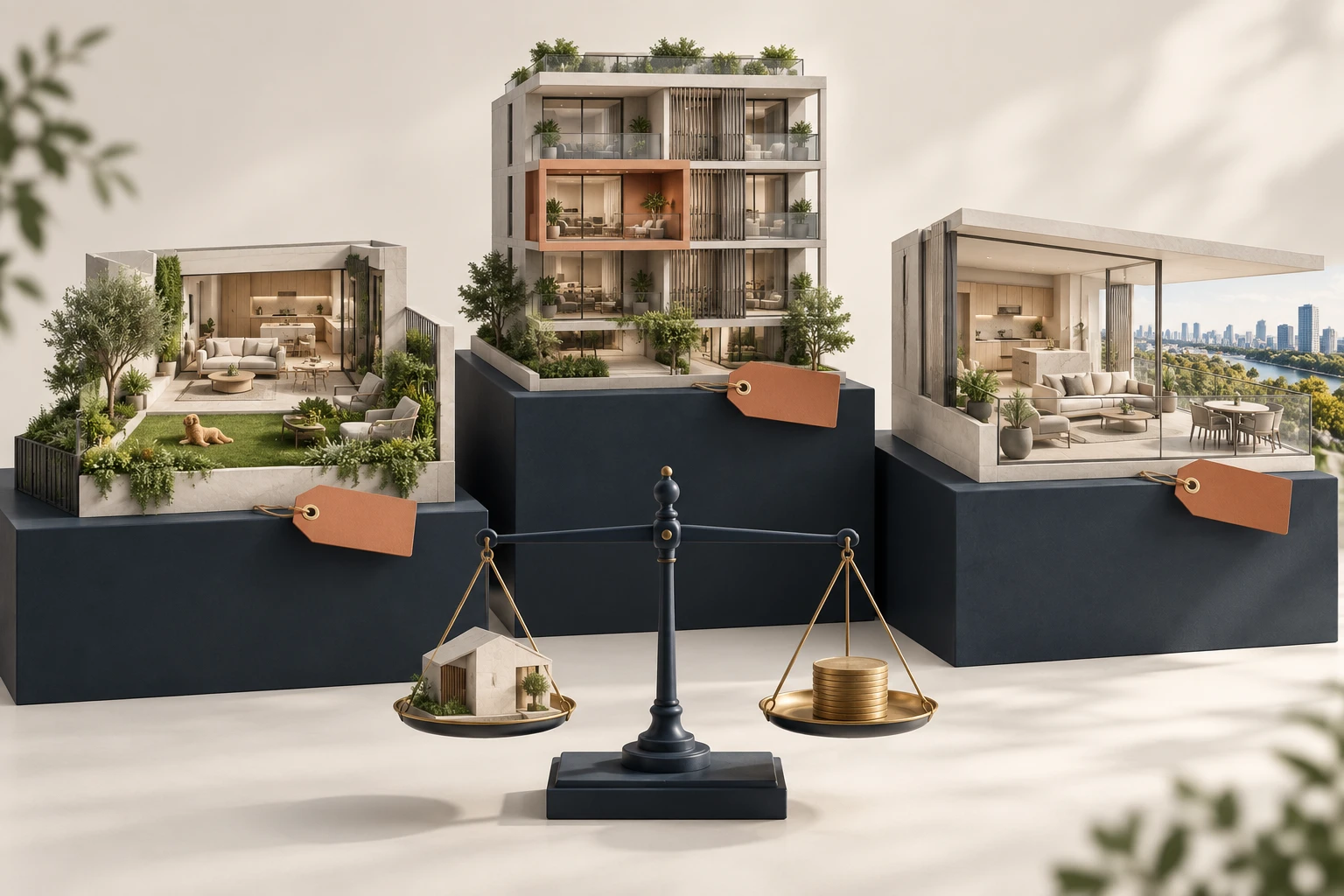
Pricing is one of the first things buyers notice and one of the main reasons they compare, enquire or move on.
For a developer, the price needs to support the project’s commercial goals. For a purchaser, it needs to make sense against the other properties they could buy.
Bringing those two perspectives together is an important part of preparing a development for sale.
Look at what buyers can choose today
Recent sales provide useful context, but buyers are also looking at what is available now.
They may be comparing your development with another off-the-plan project, a newly completed residence or an established property nearby.
Consider the full offer: location, internal space, outdoor areas, aspect, parking, inclusions and expected completion. A similar bedroom count does not necessarily mean a similar property.
The comparison should help explain where your project sits and why.
Price each residence on its merits
A development needs a consistent pricing approach, but each residence has its own strengths and compromises.
A larger courtyard may appeal to a buyer with a pet. An upper-level residence may offer a better outlook. A quieter position, additional storage or a more practical layout may matter more to some purchasers than extra floor area.
Think carefully about the differences between residences and the premiums attached to them. Buyers should be able to understand what they receive for the additional spend.
Consider the buyer’s total commitment
Buyers look beyond the advertised price.
They may need to allow for purchase costs, upgrades, moving expenses and ongoing ownership costs. Some will also be weighing up the proceeds from selling their current home.
Clear inclusions and transparent information help them assess the purchase. If essential features carry additional costs, make those costs easy to identify early in the conversation.
Give your sales agent the reasoning
Your sales agent needs to understand how the pricing was established.
What supports the premium on a particular residence? Which competing properties were considered? How do the inclusions compare? Where does the project offer something difficult to find elsewhere?
An agent who understands the reasoning can have a more useful conversation with a buyer than one who has simply been handed a price list.
That reasoning also needs to hold up when purchasers make their own comparisons.
Read the response carefully
Once the campaign begins, look at how buyers respond to individual residences.
Which properties attract enquiries? Which lead to appointments? Where does interest stop progressing?
A lack of sales does not automatically identify a pricing problem. Buyers may need clearer information about the layout, more confidence in the timing or a better understanding of what is included.
Equally, repeated feedback that a residence compares poorly on price deserves attention. Look for patterns across informed buyer conversations before deciding what to change.
Keep the remaining residences in focus
As sales progress, the available mix changes.
Early sales may favour certain layouts or price points, leaving residences that appeal to a different purchaser. Review how those properties are presented and whether the pricing differences still make sense across the remaining selection.
Each residence needs a clear place in the campaign through to the final sale.
Start with a considered position
Good pricing gives buyers a credible reason to consider your project and gives your sales agent a clear basis for discussion.
It should be supported by relevant comparisons, a sound understanding of the likely purchaser and attention to the differences between residences.
At Select Project Sales, we work with developers of smaller residential projects across Brisbane to assess the competing market, consider pricing and manage the sales process.
Let’s start with a conversation about what’s needed.
Start a conversation 0414 288 677